
A.I. Within
After all, who made it?

Artificial Intelligence, A.I. Many of you commented on last week’s post, especially after watching the video I linked that exposed the serious dangers. Here’s a question: where did A.I. come from? It’s not a trick question and the answer is obvious - we made it.
“We” being scientists, tech geniuses using imagination and skills to make… what? Here’s my vision on this: they made A.I. in our likeness. It’s just like us. And … that makes us Gods.
A.I. stands for artificial intelligence, which is exactly what we’re running. Artificial, not natural. How else would you describe the thinking that created, for instance (thanks to Econation for this data:)
Hydrogenated Oils
The health scourge of the 2000s, Hydrogenated Oils, also known as ‘trans fats’, were invented for a practical purpose. In the late 1800s, people began adding hydrogen to vegetable oils to increase the shelf life of foods. When margarine, a ‘trans fat’ was first marketed it was called a healthy choice as an alternative to butter. As it turns out modern studies found that hydrogenated oils, which do not occur naturally, had unforeseen health consequences, contributing to a rise in bad cholesterol and increasing the risk of heart disease.
DDT
DDT was supposed to be the magic bullet against the scourge of insect-borne diseases like malaria. Discovered in 1873, DDT wasn’t used widely until 1939, when Swiss chemist Paul Hermann Muller noted its effectiveness as a pesticide during World War II, a discovery that earned him a Nobel Prize in 1948. After the war, the use of DDT from 1942 to 1972, some 1.35 billion pounds of DDT were used in the U.S.
Rachel Carson’s book Silent Spring published in 1962 was the first to call attention to the nasty little fact that DDT produced fertility and neurological problems in humans and accumulated up the food chain in wildlife, poisoning birds. Use of the chemical was ultimately banned, but it took many years.
Asbestos
Asbestos appeared to be a wonder material. It is a versatile mineral fibre that is good at absorption and can withstand heat. However, those same strong and useful fibres are really rather nasty. Inhaling the toxic particles in asbestos causes asbestosis — a condition instigated by fibrosis in the lungs, sparking chest pain, shortness of breath, nail abnormalities, clubbing of fingers and other complications.
Leaded petrol
We now have unleaded petrol. For six decades, petrol companies sold leaded petrol, ignoring the known dangers associated with lead so they could get rich. Tetraethyl lead boosted the octane levels in petrol but there was speculation surrounding the safety of that decision from the beginning. In the Nov. 10, 1924, issue of TIME, a report showed that 35 men at the Standard Oil Company of New Jersey had come down with an “occupational disease.” Symptoms ranged from insomnia to low blood pressure, all due to lead poisoning.
CFCs
Chlorofluorocarbons, or CFCs, wreak havoc on the atmosphere. Used in refrigeration units and aerosol cans, CFCs combine with atmospheric ozone, neutralising the molecular compound and reducing the ozone layer, an important barrier that protects the earth’s surface from ultraviolet radiation from the sun. While increased regulation since the 1970s has diminished their use, CFCs can endure in the atmosphere for nearly a century, making this a very long-lived mistake.
Agent Orange
A potent herbicide used from 1961 to 1971 in the Vietnam War, Agent Orange was used to decimate Vietnam’s thick canopy of foliage. While it succeeded, the price was high: exposure proved deadly to humans, causing cancers, birth defects and a slew of other disorders. Over 80 million litres of it were dumped on Vietnam, resulting in hundreds of thousands of injuries and birth defects to Vietnamese citizens. U.S. veterans faced exposure too.
Polystyrene foam
Created by the Dow Chemical Company in 1941, styrofoam (polystyrene foam), is light, buoyant and a very good insulator. Cups, plates, packaging, insulation and a multitude of other uses do not outweigh the fact that styrene, one of 57 chemicals released during the creation of styrofoam has been deemed by the EPA as a possible carcinogen. Discarded polystyrene does not biodegrade for hundreds, possibly thousands, of years.
Polystyrene foam is a major component of debris in the ocean, where it becomes hazardous to marine life and could lead to the transfer of toxic chemicals to the food chain. It can be lethal to any animal that swallows significant quantities.
Thanks for all that, Econation.
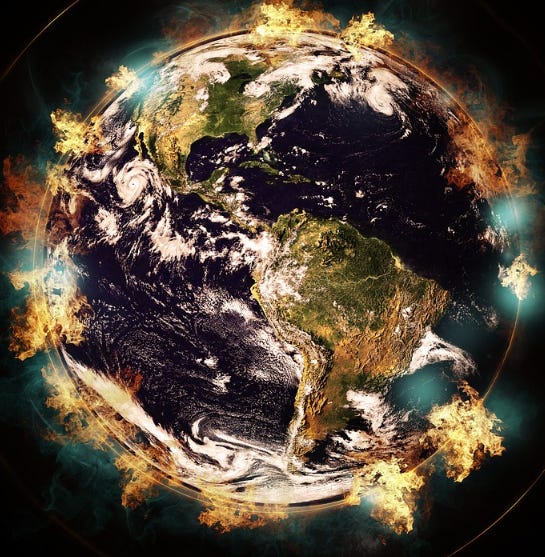
If that’s what our artificial intelligence has created (and much more, like atom bombs and lethal viruses) the worst danger isn’t from the creations but from the creator… and that’s us.
Natural Intelligence is the alternative, the original, what we all potentially have. Actually, we all have it to some degree as long as our hearts are beating … that’s what makes them beat. But the problem is with our conscious minds and what they create, disconnected from the wisdom of universal intelligence. That disconnection is what turns natural into artificial.
So, how do we get Natural Intelligence back online in our personal experience? That’s the constant message in these blogs and podcasts. The transition starts with awareness, then desire, then education, commitment, practice, and finally mastery.
We follow that famous four part journey that describes awakening:
Ignorance. We don’t know and don’t know that we don’t know.
Ready to learn: We don’t know and know that we don’t know.
Fake it until we make it: We know but don’t know that we know.
Mastery in humility: We know and know that we know … nothing.
Most readers here will be in groups 2 and 3, getting activated with Natural Intelligence. Once we are, we begin to be guided by Universal Intelligence and our creations enhance the planet and our human experience, rather than harming and destroying.
Tuning in with our conscious minds through meditation and prayer, mindfulness, and what I call activation… here’s the urgent priority if we are to counter the influence of A.I. in our world, by tackling the problem right where it originated, within ourselves.
One more devastating component to consider - cell phones and the eradication of in person interaction and in fact actual connection with the environment. Ever wander into a business's lunch room during a break, there is dead silence and each and every person is lost in their cell phones. Loosing a cell phone may equate to a total personal disaster and inability to function (phone numbers, directions, the feeling of worthiness gone quiet)