
For Lilly
A bright light blinks out of this world and into the next one.

I never met Lilly in person, just on zoom calls where we joined other meditators around the world for online retreats. We enjoyed a handful of deep conversations that hinted at many more to come. She was bright, smart, transparent about her life long struggle with depression, and had dedicated herself to researching mental health issues, traveling extensively to interview sufferers and writing a small book about her discoveries.
Lilly recently chose to leave this world. Who would judge her for that? Who knows what was right for her? But we grieve, those who knew her in various ways, and we wonder: did she receive the help she needed, when she needed it?
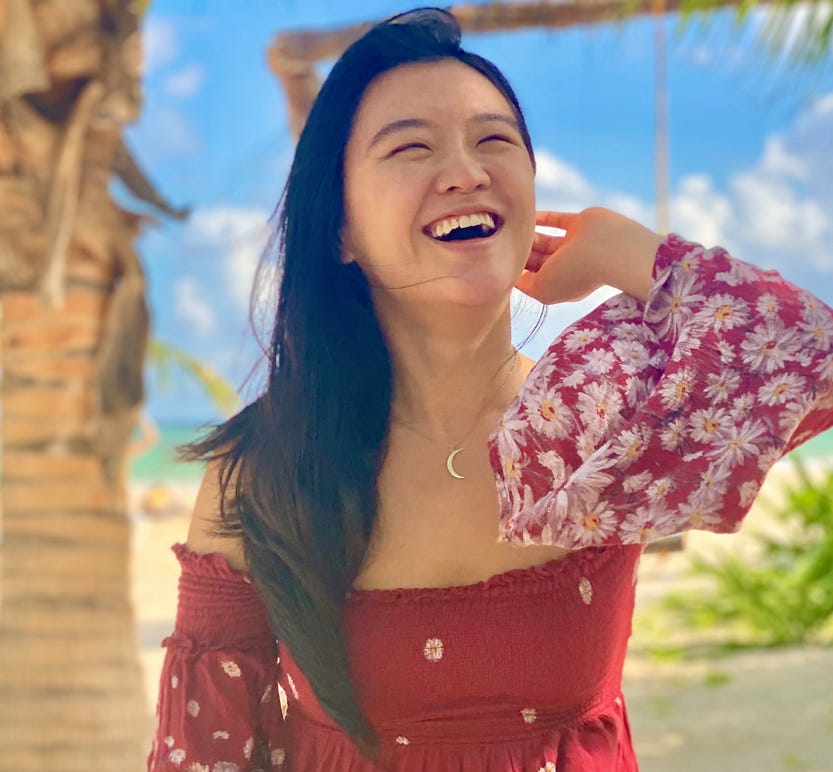
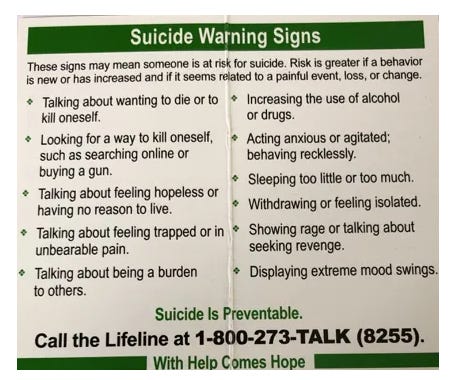
What about other friends who may be in trouble?
If you’ve been reading these posts you know that I’m now the Executive Director for a new non-profit foundation established to explore novel approaches to mental health issues, based on my latest book, The Success Paradox - How to Surrender and Win, in Business and Life.
Last week I posted here about the Garden of Eden story, musing on the veiled meaning in that reported human error, “eating from the tree of the knowledge of good and evil.” This exposes what I believe to be the primary mental health problem: we are using our minds in the wrong way. Side effect: our hearts close down.
I’m listening to a podcast with Amanda Feilding, known as the ‘hidden hand' behind the renaissance of psychedelic science. For sixty years, she has pioneered research into how these controversial medicines might assist with everything from depression and chronic anxiety, heroin and alcohol addiction, to Parkinson’s disease, Alzheimer’s, and even relieving migraine headaches.
She’s fought for decades to validate the therapeutic value of LSD, psilocybin (from mushrooms), ketamine, cannabis, etc. My point in bringing this up here is not to encourage their use but to illuminate how our minds sabotage us, in this case by demonizing something we decide is “wrong,” rather than experimenting safely with open minds to assess pros and cons and come to rational decisions. We lost decades of research when all these potential medicines were scheduled as illegal, even to research. How many people suffered and died during those years who might have been helped?
This is why I named our new organization The OpenMind Fitness Foundation. This captures the essence of mental health: having an open mind, described this way by Socrates centuries ago (as you read this, consider where you fit along this spectrum):
Intelligent individuals learn from every thing and every one;
average people, from their experiences.
The stupid already have all the answers.
Socrates said of himself: “I neither know nor think that I know.” For this and other “crimes” he was executed by the state, a warning that has echoed throughout history, captured by a modern Australian phrase: “lopping off the tall poppies.” The message: don’t stand out. Don’t have an open mind.
One of my recent posts challenged that cowardly stance, entitled Taking a Stand. This dramatic phrase conjures up images of protest and revolution. But what about taking a stand by having an open mind?
I believe I’ve mentioned how, back in the fever days of the pandemic, a total stranger declared that I should be sent to the Guantánamo prison for life, because I obeyed my doctor who recommended against vaccination for me because of my allergic sensitivities. This person’s beliefs, convictions, and certainty were so strong that he felt fine about condemning me to death.
Conversely, I listened to Dr. Feilding make a spontaneous comment the moment she witnessed a stranger on video convulsing with Parkinson’s tremors. “Oh, what a poor, unfortunate man.” She was immediately empathetic. She cared.
How much do we care about others? That’s a sign of how open our minds are. Who do we judge, who do we discount, ignore, demonize? How about Trump? He’s an easy target for so many reasons. But here’s a telling question to consider: when we witness someone talking and behaving as he does - just to use him as an example - what might it expose about ourselves? Have I ever said anything crude? Yes. Have I ever lashed out at others inappropriately, defending a frail position? Yes. Have I ever cut corners and exaggerated value? Sure.
Haven’t you?
And have I been uncaring in the face of suffering? Yes.
Perhaps being honest with ourselves is a vital first step in opening our minds.
An open mind relishes the exploration, defending nothing, attacking no one, eager to discover something new. An open mind doesn’t fortify an established position while finding ways to discount something novel just because it challenges the accepted norm. Open minds would never have condemned Socrates to death, just because he was humble.
English writer G.K. Chesterton warned, “When men choose not to believe in God, they do not thereafter believe in nothing, they then become capable of believing in anything.” I think this further explains, even focusses the essence of our mental health problem. Futurist Ray Kurzweil famously answered the question, “Is there a God?” by saying, “Not yet.” He’s one of many who arrogantly believe that the mind, disconnected from God and closed to anything but it’s own self-manufactured certainty, is God, only requiring enough technology to prove it with total domination of the natural world.
Meanwhile, Lilly doesn’t live here any more. What a sad thing. I’m not sure I will ever forget how I felt when I received the news of her departure; it pierced my heart. But that doesn’t change anything. What could?
Perhaps Lilly might have made a different choice if more, different, better help had been available for her. None of us can know that and she wouldn’t want us to feel guilty about signs we missed. But perhaps her passing can inspire a few of us to move from our heads to our hearts and demonstrate, as Amanda Feilding did, immediate compassion for each other. Who knows what a single moment of kindness might accomplish? And perhaps moments like that prove the existence of God, expressing through us not as cleverness but as compassion.
The Chinese proverb wisely observes: “If you don’t change direction, you’ll end up where you’re heading.” It’s time to change direction, personally and globally, because we’re swamped in an epidemic of mental illness. But, as a friend who recently attended a conference where well-meaning activists discussed everything from climate change to nuclear dangers told me, not a single word was uttered about mental health.
THIS is the elephant in the room.
Helping alleviate the insanity increasingly engulfing our species - as of this writing there have been almost 400 mass shootings in American so far this year, another warning sign we can choose to ignore or use to get activated - demands that we open to possible remedies well outside our conviction zone. Our new foundation will research and explore every avenue we encounter. Because while you’ve been reading, about a dozen people have chosen to end their life, one every 40 seconds somewhere in the world.
If you feel called to help with this initiative, let me know and I’ll keep you informed as the Foundation begins its work.
For Lilly.
We cherish sweetness where we find it and seek to nurture those who struggle to be in this world, the best we can. The sadness that comes with each passing expands our hearts so we can provide more holding space for the many others...
She was the sweetest flower, transparent and fresh. She touched my heart and continues to speak to that part that does not feel loved or seen. I still feel you dearest Lily and your heart continues to speak to ours in the most tender way. Thank you