
Beyond Words
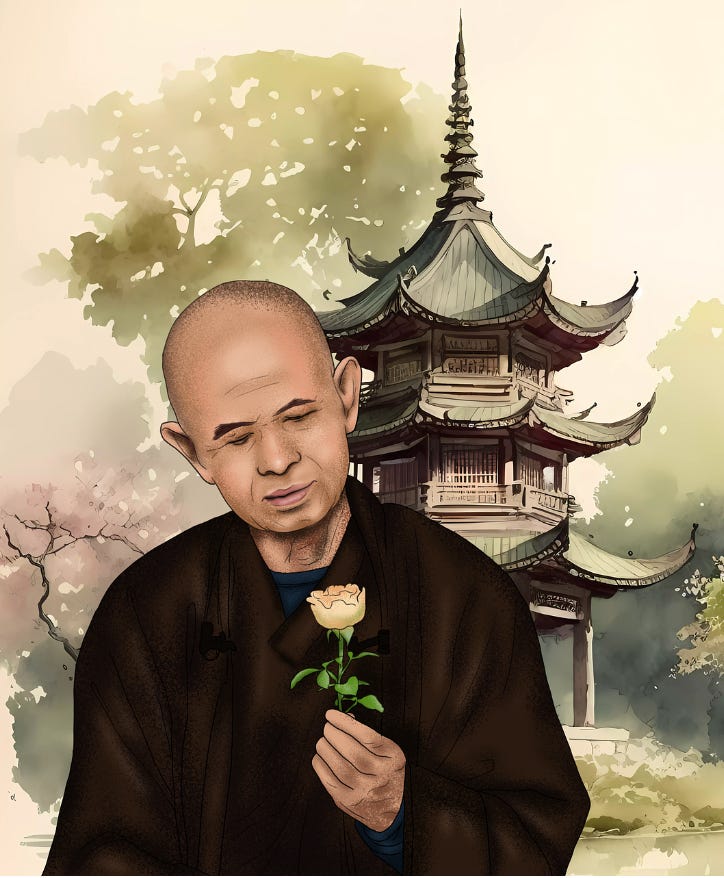
The true master teaches without words.

As an author with twenty some books in print and after writing millions of words, I’ve recently begun questioning the downside of words as a possible threat to our individuality and our friendships.
The development of spoken and written language has always been considered a breakthrough achievement for our species, enabling us to communicate complex thoughts, to make tools, to build things, etc.
But every gift comes with a curse. Words are symbols that we agree to interpret in roughly the same way, with personal variations. A door is a door. A cat is a cat. Words can forge unity at a cognitive level.
What could be wrong with that? Well, you and I are not the same. How could we and why should we think / believe the same? Does peace and happiness shared by humans require unison or are we designed uniquely, so we can blend our individual notes into expansive harmonies? And does over reliance on words blind us to what the body feels, and what the heart yearns for? Have we used words to migrate into our heads where we survive in isolated fear of … what, variety?
And, in these days of such intense polarization, must we agree on what words mean to remain friends? Words like democracy and authority and freedom and control can mean very different things to different people.
Still, it’s almost impossible to imagine a society without a million agreements that involve language, from driving on the “right” side the road to “decency,” for instance, wearing clothing in public. So, let’s agree that it is necessary and helpful to agree about many, many things. But there’s a shadow side to word based consensus. What happens when our personal interpretations conflict? Millions of people have died over conflicting interpretations of beliefs like freedom.
Meanwhile, there’s a world of information and sensation beyond words. And the true master teaches without words. How? Their presence generates a high frequency field and those who come near - at least, those who are open and sensitive enough - can be instantly entrained into some beginning version of the master’s enlightened state, their actual experience in real time, rather than how they might describe it in written or spoken words.
Without Tibetan gurus stationed on every corner, our most available transcendent experience is probably physical sex, at least it carries that potential. Here is the most personal experience two people can share with each other. At the pinnacle of human creativity, another completely unique being may be conceived. That’s the physical part and it’s impressive. Bring love into the equation and suddenly there’s a whole new consideration: intimacy / vulnerability.
For those who struggle with being vulnerable, consensual sex can be more like socially acceptable masturbation than real intimacy. Disconnected. And partners feel that. I bet that many women would describe some of their sexual experiences with men as fundamentally dissatisfying on an emotional level. And many men, feeling overwhelmed by the immense power of the feminine and poorly educated in how to handle it, often retreat into themselves for pleasure without ego risk.
Hence the sex bots, already a 35 billion dollar industry.
No need for vulnerability there. And they can be scaled up; there can be millions of them to satisfy the demand. Not so with humans. None of us are scalable; we’re all 100% unique. And mastering deep diving intimacy with one person doesn’t automatically create the same experience with another. New chemistry. New frequencies to harmonize.
Having sex with a robot could be so much easier than getting vulnerable with another human. But …
I remember a young character in a coming of age film describing her first sexual experience. She said, “I had no idea it would be so personal.”
Talking can ruin sex. We usually enjoy a wordless experience (sounds don’t count as words). So, if - in some cases - words can get in the way of being personal and intimate with each, what’s the remedy. Just silence?
Silence is golden, after all, right? And there’s a world of sensation and intuition to explore in silence.
So, there’s that. But what if we also began using fewer words? And, what if we experienced their unique meaning to us without conceptual framing? Then, if we did that together, might that not encourage us to all just enjoy a harmonic experience, without demanding we compromise into unison… arguing our way there with more words and usually just expanding the divide between us?
I’ll start:
. Gratitude.
What does reading this word evoke? Notice how you probably began to create words to answer that question. So, this time, see if you can read that one word and just experience what it means to you, without words. If you can, refrain from having thoughts about it, defining it, don’t think about writing a comment here, or even imagining telling anyone about it.
Just feel it, whatever “gratitude” is for you right now. Say the word once, silently, and then feel it’s echo of meaning… without description. You are being grateful, not thinking about gratitude. One is an emotion, the other is a thought.
This could begin a rich experiment for us, exploring and enjoying the meaning of our lives in every moment, beyond words. It might even aim us back to easy friendship with each other, away from the soap opera of polarization and conflict.
You talk when you cease to be at peace with your thoughts;
And when you can no longer dwell in the solitude of your heart you live
in your lips, and sound is a diversion and a pastime.
And in much of your talking, thinking is half murdered.
For thought is a bird of space, that in a cage of words may indeed
unfold its wings but cannot fly.
Kahlil Gibran
Anything that can be described with words is limited and limited knowledge doesn't promote unlimited understanding.